Track everything you own, in one currency
Vault holds five asset classes — stocks and ETFs, crypto, real estate, cash and debt, and everything else — in any currency and any region. Listed positions price themselves from public markets. Illiquid ones stay manual, permanently. Every total is converted into the one currency you count in.
Five classes, and what each one really is
Three of them are ledgers rather than a number you overwrite, because a position has a history and a balance is only its last line.
- Stocks, ETFs and bonds — a buy-and-sell ledger per position. Quantity, cost and current price, with the region taken from the listing exchange.
- Crypto — priced from public exchange data. Self-custodied coins count exactly like exchange-held ones, because you enter both the same way.
- Real estate — a valuation you control, with its mortgage attached: schedule, interest, overpayments and events. Equity is shown, not calculated by you.
- Cash and debt — accounts in any currency on one side, revolving credit and loans on the other, both as dated ledgers.
- Everything else — a stake in a private business, a vehicle, a watch, precious metals, art. Ten categories, manual forever, never nagged into a ticker.
Automatic where it can be, manual where it must be
Every holding is either auto-priced from a ticker or valued by you. Vault never forces a ticker onto a flat. When a price feed fails or lags, the holding keeps its last good value and says so on its face. A wrong number announced quietly is worse than no number, so Vault never falls back to zero.
Multi-currency without the spreadsheet gymnastics
Hold in dollars, euros, pounds, dirhams, francs. Rates refresh through the day and every figure on every screen is converted into your base currency. Change the base currency and the whole history re-reads in the new one.
Six ways to read the same total
By asset class, by currency, by region on a map, by liquidity, by what you hold directly against what reaches you through a company, and holding by holding. The dashboard is a grid of widgets you arrange yourself — move the ones you read to the top, resize them, hide the rest.
Direction, not just position
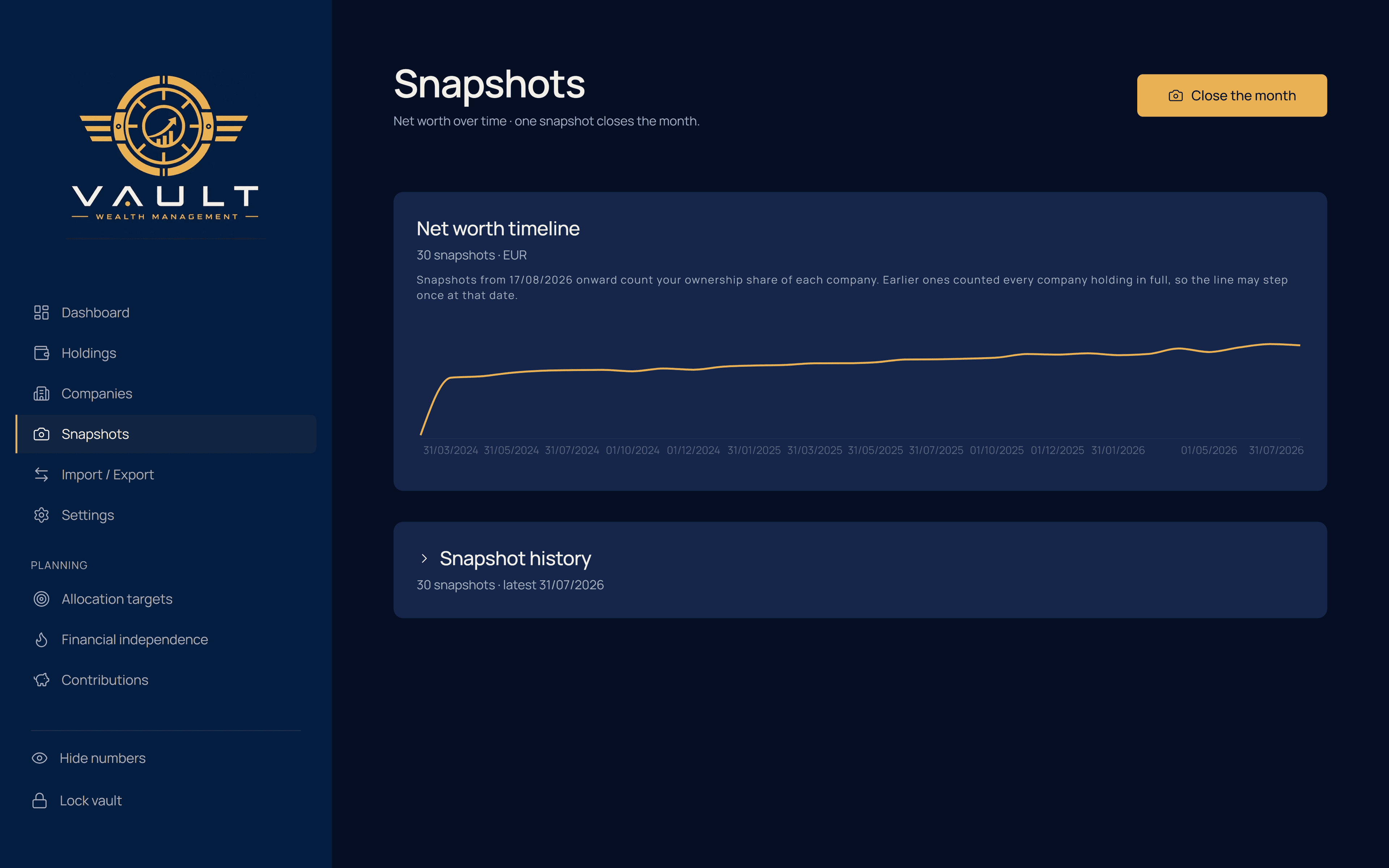
Closing the month writes a snapshot: every holding's value that day, the totals, and the savings rate for the period. Two closes make a line. Twelve make a trend you can argue with.
Some charts approximate past exchange rates with current ones, and net worth changed what it measures when company holdings began counting as your share rather than in full. Vault shows direction over time; it does not claim a restatable historical record.